Best Concrete Patio Shapes for Narrow Backyards
A narrow backyard can feel tricky at first. You may look at the space and wonder if there is enough room for a patio that feels open, useful, and attractive instead of cramped. The good news is that the right concrete patio shape can completely change how a slim outdoor area works.
In this guide, you’ll learn which patio shapes make narrow backyards feel larger, how to choose a layout that fits your lifestyle, and what design details help the space feel polished without wasting square footage.
Why Shape Matters in a Narrow Backyard
When space is limited, patio shape matters just as much as patio size. A poorly planned patio can block movement, crowd furniture, or make the yard feel like a hallway. A smart shape, on the other hand, guides the eye, creates zones, and makes every inch count.
Homeowners who work with a residential concrete builder in Goodyear AZ can often get better results because the patio can be shaped around the yard instead of forced into a standard rectangle. This is especially helpful for narrow lots, side yards, and compact backyards where small layout choices make a big difference.
Before choosing a shape, think about how you want to use the patio. Do you want a dining space, a fire pit area, a grilling station, or a simple place to relax with coffee? Your answer should guide the layout.
Long Rectangular Patios for Clean, Simple Layouts
A long rectangular patio is one of the most practical choices for a narrow backyard. It follows the natural shape of the yard, keeps the layout clean, and makes furniture placement easy.
This shape works well when you want:
- A straight walkway from the house to the yard
- A dining table placed along one side
- A grilling area near the back door
- A simple, low-maintenance outdoor surface
The main risk with a rectangle is that it can look too plain. To avoid that, add visual breaks. You can use saw-cut lines, border accents, planters, or different furniture zones. Even a slight change in concrete finish can make the patio feel more custom.
For homeowners comparing Goodyear concrete services, it is worth asking how the contractor would break up a long patio visually so it does not feel like one flat slab.
Curved Patios That Soften Tight Spaces
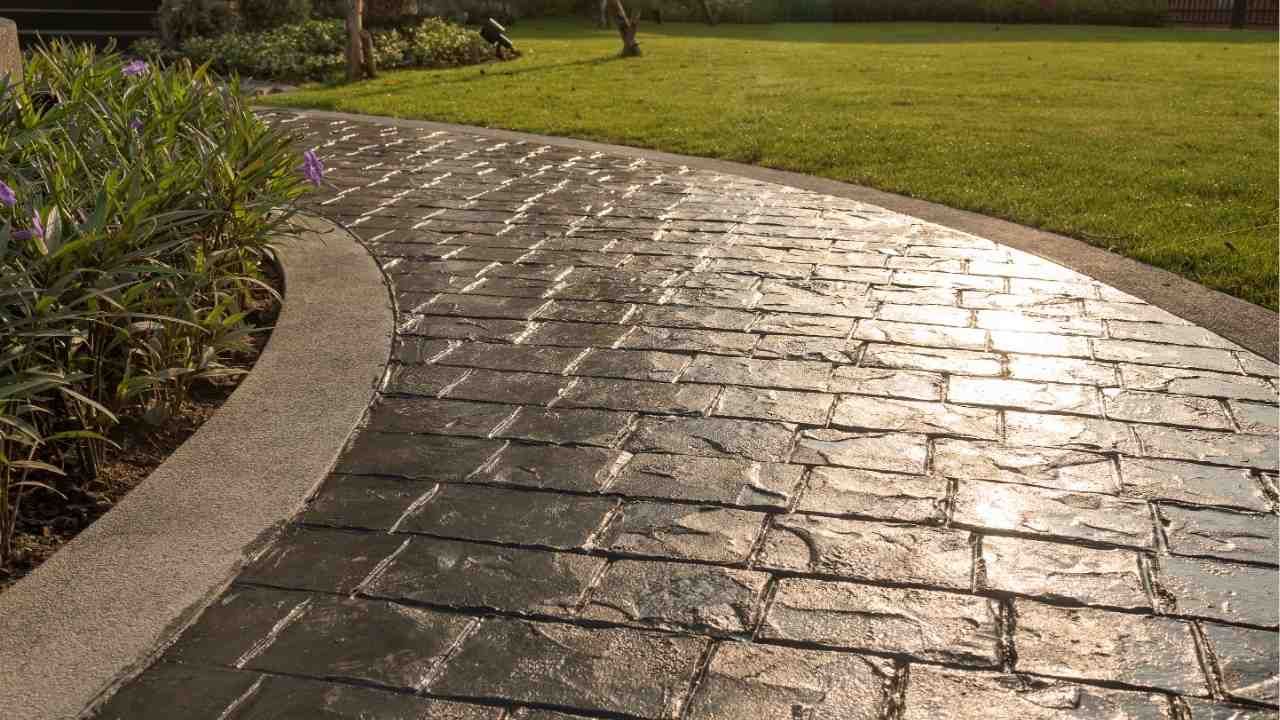
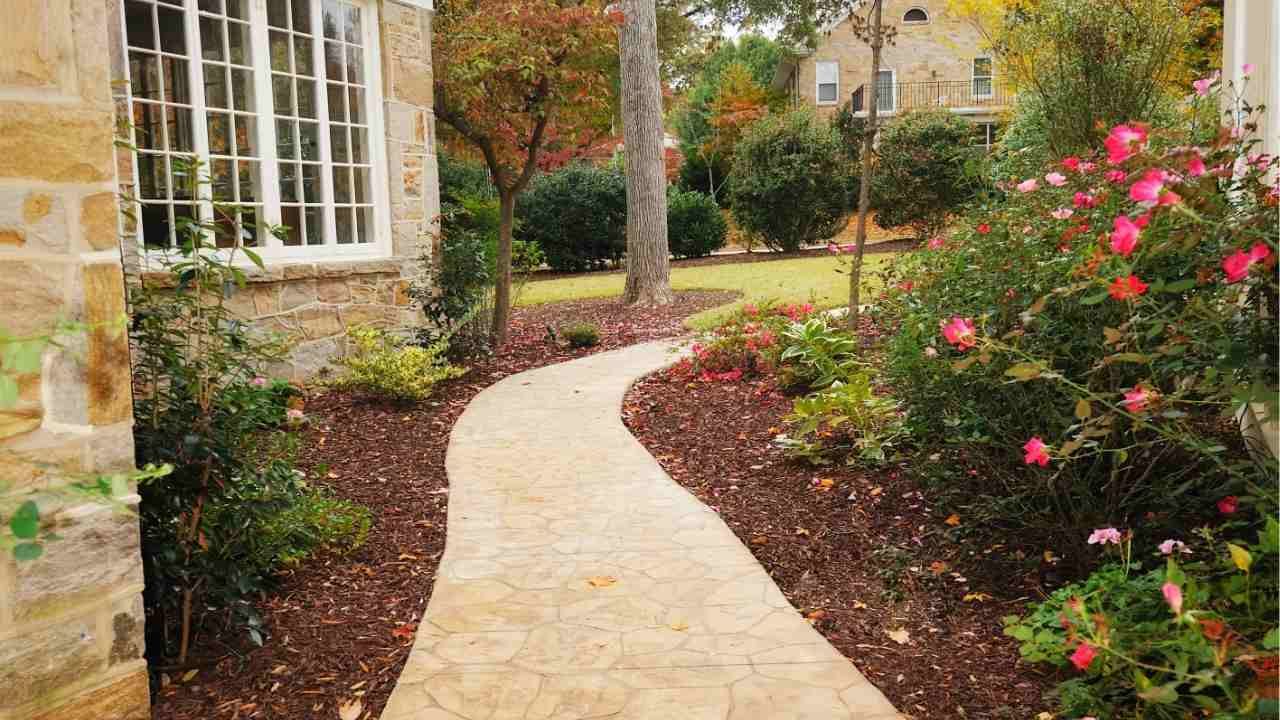
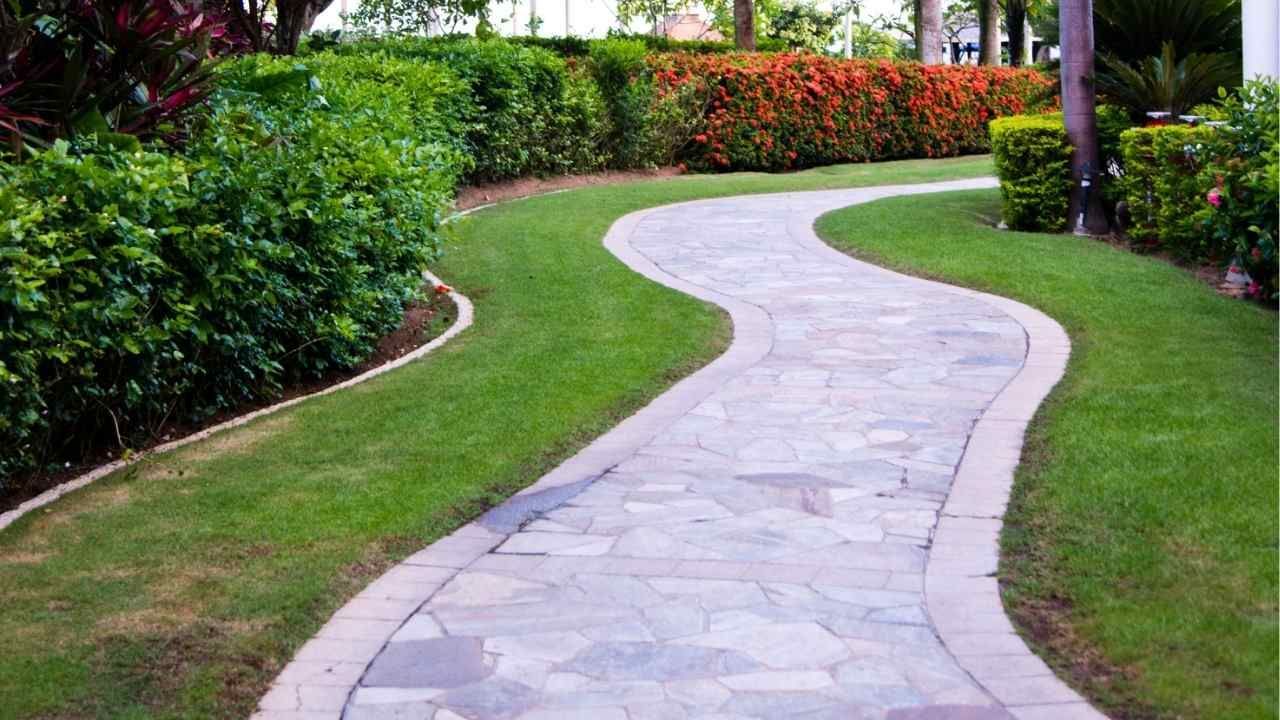
Curves can work surprisingly well in narrow yards. A curved concrete patio helps soften hard property lines and makes the space feel less boxy. Instead of drawing attention to the narrow width, the curve encourages the eye to move naturally through the yard.
A curved patio is a good fit if your backyard has garden beds, trees, or a more relaxed landscape style. It can wrap around planting areas or create a cozy seating nook without making the yard feel crowded.
The trick is restraint. In a narrow yard, too many curves can waste space. A gentle curve along one edge is usually enough to add character while keeping the patio functional.
L-Shaped Patios for Separate Outdoor Zones
An L-shaped patio is a strong option when you want more than one outdoor area. One section can sit directly outside the back door, while the other extends along the side of the yard. This creates a natural separation between activities.
For example, you might use one part for dining and the other for lounge seating. If you have a grill, storage bench, or small outdoor kitchen, the L-shape can help keep those features from crowding the main seating area.
This layout also works well when the backyard connects to a side yard. Instead of treating the side yard as wasted space, the patio can turn the corner and make it useful.
Offset or Stepping-Stone Patio Shapes
Not every concrete patio needs to be one large slab. In a narrow backyard, an offset or stepping-stone layout can feel lighter and more spacious. This design uses separated concrete pads with gravel, grass, or ground cover between them.
This shape works especially well for casual seating areas, garden paths, and modern outdoor designs. It also gives the yard texture, which helps prevent the space from feeling flat.
A local concrete professional can help decide the right spacing between pads so the layout looks intentional and remains comfortable to walk on.
Short Case Study: Making a Slim Yard Feel Bigger
A homeowner with a long, narrow backyard wanted space for dining, grilling, and a small lounge area. A full-width rectangle would have made the yard feel tight, so the contractor suggested a modified L-shaped concrete patio. The first section stayed close to the back door for the grill and dining table. The second section extended along the fence with enough room for two lounge chairs and planters. By leaving a strip of landscaping on one side, the patio felt open instead of boxed in. The final result gave the homeowner three useful zones without overwhelming the yard.
Design Tips That Make Any Shape Work Better
Once you choose the shape, the finishing details matter. Narrow patios benefit from design choices that create depth and movement.
Consider these ideas:
- Use light or medium concrete tones to keep the area bright
- Add border details to define the patio edge
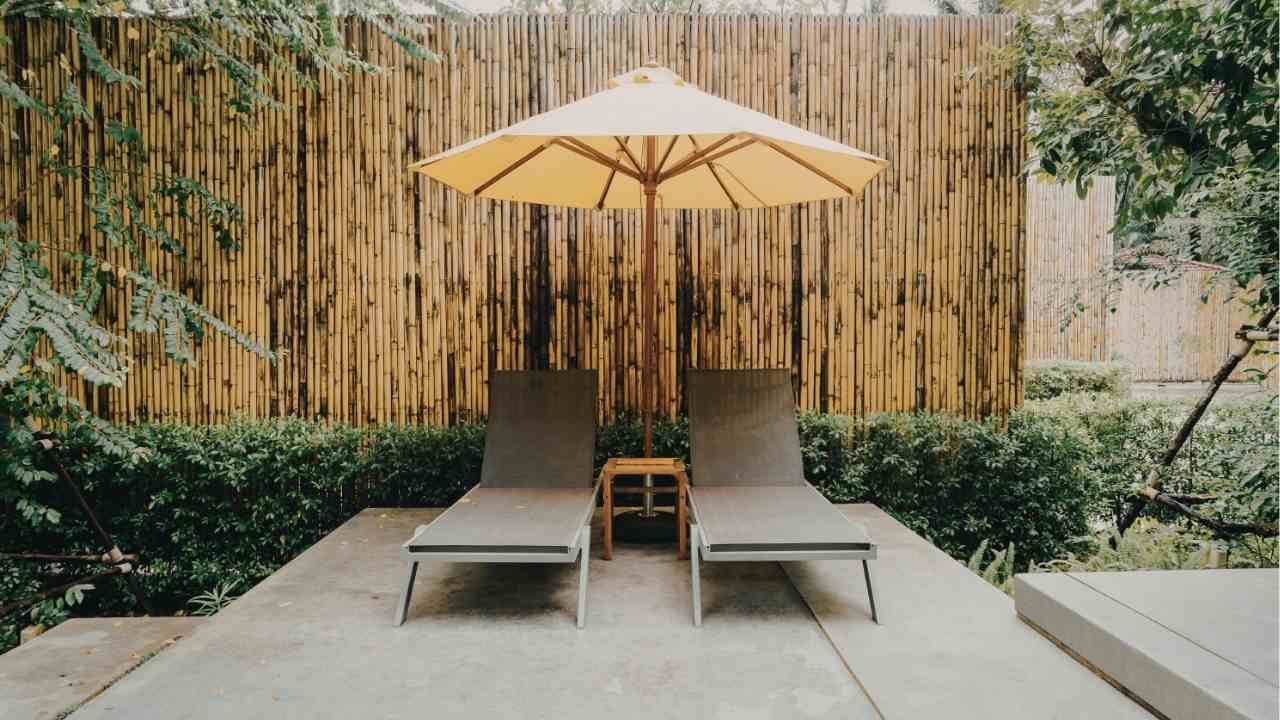
- Choose slim outdoor furniture instead of bulky pieces
- Place planters vertically along fences
- Use built-in benches to save floor space
- Keep walkways clear and direct
The goal is not to fill every inch. The best narrow backyard patios leave room to move, breathe, and enjoy the space comfortably.
Final Thoughts
The best concrete patio shape for a narrow backyard depends on how you plan to use the space. Rectangular patios are simple and efficient, curved patios soften tight lines, L-shaped patios create zones, and offset pads add a modern, open feel.
If your backyard feels too narrow to be useful, do not assume your options are limited. With the right patio shape and smart planning, even a slim outdoor area can become one of the most enjoyable parts of your home.
Start by sketching your backyard and marking how you want to use each area, then schedule a consultation with a concrete contractor who can turn that narrow space into a practical outdoor retreat.